
Book your private session
Get genuine guidance from Pandit Basant Vyas Ji
Book NowApp Available on:






BLOG
Sita Navami
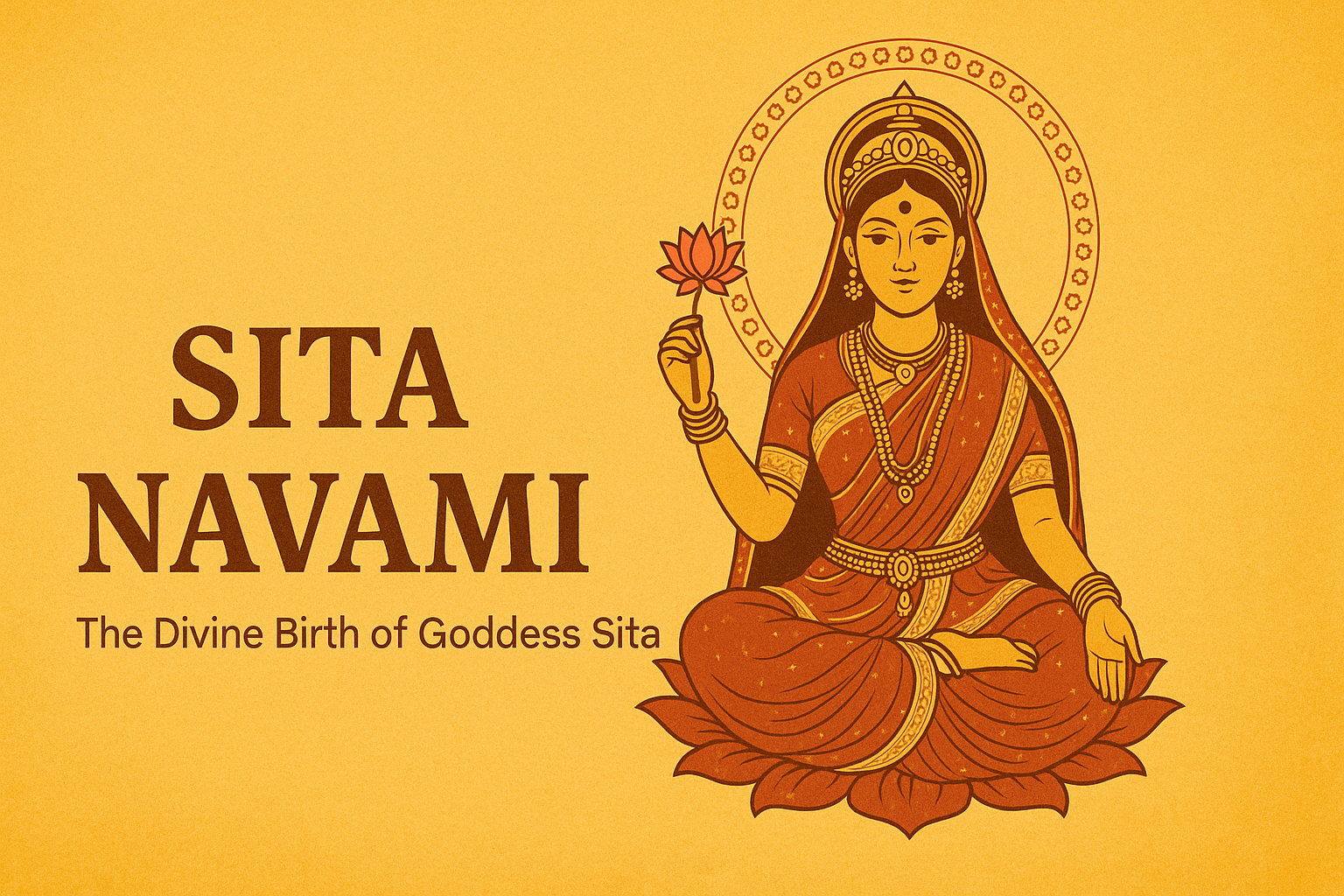
Sita Navami
Posted on 05 May 2025 | by Astro Star Talk
🌸 Sita Navami: The Divine Birth of Goddess Sita – Significance, History & Celebrations
Sita Navami, also known as Janaki Navami, is a sacred Hindu festival that marks the birth anniversary of Goddess Sita, the divine consort of Lord Rama. Celebrated with great devotion across India and Nepal, especially in Mithila (her birthplace), this festival symbolizes feminine strength, purity, sacrifice, and devotion.
Observed on the ninth day (Navami) of Shukla Paksha in the month of Vaishakha (April–May), Sita Navami is one of the most spiritually significant occasions in the Hindu calendar. Let’s explore the origin, history, mythology, rituals, and significance of this auspicious day.
✨ Mythological Origins of Sita Navami
The story of Sita’s birth is nothing short of divine.
According to the Valmiki Ramayana, King Janaka of Mithila discovered Sita in a furrow while ploughing the fields during a ritual yagna. She was born from the Earth (Prithvi), earning her the names:
Bhoomija – Daughter of the Earth
Janaki – Daughter of King Janaka
Vaidehi – Princess of the Videha kingdom
Sita is regarded as an incarnation of Goddess Lakshmi, born to accompany Lord Vishnu in his avatar as Lord Rama. Her life exemplifies strength, grace, sacrifice, and steadfastness in dharma (righteousness).
🕉️ Spiritual Significance of Sita Navami
Sita Navami isn’t just a religious event; it’s a celebration of ideal womanhood and divine virtue. Here’s why it holds such importance:
🔹 Upholder of Dharma
Sita’s unwavering commitment to righteousness, even in adversity, makes her a symbol of spiritual and moral strength.
🔹 Feminine Divinity
She embodies Shakti (divine feminine energy), standing tall as a paragon of resilience, purity, and devotion.
🔹 Complements Rama Navami
Sita Navami falls one month after Rama Navami, symbolizing the cosmic union of divine masculine and feminine energies.
🌼 How is Sita Navami Celebrated?
🌞 Fasting and Worship
Devotees, especially women, observe a day-long fast. Rituals begin with a holy bath, followed by the worship of Sita, Rama, Lakshmana, and Hanuman with flowers, incense, sweets, and bhog.
📖 Reading the Ramayana
Passages from the Ramayana, especially the Bal Kand and Sundar Kand, are recited. Some even enact the divine marriage of Sita and Rama (Ram-Sita Vivah Utsav) in temples.
🎶 Kirtans and Bhajans
Devotional songs, bhajans, and kirtans dedicated to Sita and Rama fill the air in temples and homes.
🍛 Charity and Annadanam
Offering food, clothes, and alms to the poor is a major part of the celebrations. Community feasts (bhandaras) and Annadanam are organized in many places.
🛕 Temples & Pilgrimage Spots Associated with Sita
Here are some key places where Sita Navami is grandly celebrated:
Janaki Mandir, Janakpur (Nepal): Built on the exact spot where she was found.
Sitamarhi, Bihar: Another important birthplace shrine.
Sita Kund, Bihar: Sacred tank where Sita bathed.
Valmiki Ashram, Nepal: Where she spent her final years.
Punaura Dham, Bihar: A popular pilgrimage center.
💬 Life Lessons from Sita’s Story
Sita’s life is not just mythology — it’s a blueprint for spiritual living. She teaches us:
To stay rooted in dharma even when life is unjust.
That inner strength is the highest form of power.
How to embody grace in suffering and detachment in glory.
🪔 Final Thoughts
Sita Navami reminds us of the timeless values of devotion, virtue, and divine love. As we celebrate her birth, we’re not just honoring a goddess from an epic tale — we are reconnecting with the spiritual essence of feminine power and endurance.
So, this Sita Navami, light a diya, chant a mantra, and reflect on the life of a woman who stood tall as an icon of strength, grace, and truth.
📅 Don’t Miss:
Date (2025): Monday, May 5
Tithi: Vaishakha Shukla Navami
🔔 Stay connected for more posts on festivals, spirituality, and ancient wisdom.
Feel free to share this blog with those who wish to learn and celebrate India’s rich cultural heritage.